Friday, 16 August 2013

Long Ride Itinerary

it's been a long time coming out with the final version of just where and when we'll be doing what. after poring over countless maps, forum pages, Lonely Planet guides, it's  not exactly the most interesting route to take I'll admit, but the compromises seem justified; four months is a really short time for this and the routes been tailored  significantly to balance interesting bits to see and do as well as maximal chances of success.  Main considerations are the minimum number of international borders, preferably no need for a Carnet de Passage, friendly officials and cancer centres to visit, no recent outright killing in the streets, (civil unrest permitted).  without these constraints the route would have looked a lot different and a higher chance of never coming back.  of course everybody who has done anything like this before will know that like any battle plan it will all go to pot within three minutes of contact, but it's nice to have something to hang your helmet on.

what this means is no india and pakistan, which means no Karakoram highway, assam highlands, veronasi, darjeerling, and some broken promises to very encouraging indian and Pakistani collaborators.  one of these days we will find time.  on the other hand the need to find other cancer centres  have opened our eyes to not so traditional collaborators in Almaty, Urumqi, Chengdu and other places that hopefully will make up some of what was lost.


now that the route is settled things are starting to swing quite rapidly.  Next week we'll be holding a charity dinner to explain to some very generous donors the aim and rationale of our little ride and what it might be like; the week after as we approach the breast cancer awareness month (traditionally this is October) we go to press to announce the trip and what can come of it, in january the shakedown ride is a 5000km round trip to chiangmai to see what falls off the bike and when we return some fairly intensive afternoons at the mechanics' to get up to speed. then the final change with new oils, chains, suspension, cables, batteries, and off we go.

with everything falling into place the sensation has shifted from not whether or not this is possible - we are convinced that it is - to one of whether we'll manage.  so much has been invested in terms of time and costs, of explaining and cajoling and pleading, that the worst fears are starting to come to mind. something truly inane, indefensible and absurd.  like, right after a gala send off, main fuse blows half way on north south highway and we spend the night in malacca.  stuff like that.  won't look good in the book. on second thoughts, that would look good in the book.


Country
City/ town
Km
Nights
Date (Depart)


14,043
51
21 Mar 2014, Fri

Singapore


21 Mar 2014, Fri


1.
Malaysia
Kuala Lumpur
238
2
23 Mar, Sun


2.
Thailand
Hat Yai
530
2
25 Mar, Tues


Surat Thani
340
1
26 Mar, Wed


Prachuap Khiri Khan
360
1
27 Mar, Thurs


Suphan Buri
420
1
28 Mar, Fri


Lampang
500
1
29 Mar, Sat


Chiang Mai
106
2
31 Mar, Mon


Chiang Khong
320
1
1 Apr, Tues


3
Laos
Boten
410
2
3 Apr, Thurs


4
China -    Yunnan
Mohan - Mengla - Jinghong
180
2
5 Apr, Sat


Kunming
540
1
6 Apr, Sun

Sichuan
Yibin
585
1
7 Apr, Mon


Chengdu
275
1
8 Apr, Tue


Jiuzhaigou
530
2
10 Apr, Thurs

Gansu
Langmusi
365
1
11 Apr, Fri


Labrang
185
1
12 Apr, Sat


Taer
480
1
13 Apr, Sun


Xining
400
1
14 Apr, Mon

Zhangye
670
1
15 Apr, Tues


Dunhuang
595
2
17 Apr, Thurs

Xinjiang
Hami
480
1
18 Apr, Fri


Urumqi
600
2
20 Apr, Sun


Horgas/ Korgas border
650
1
21 Apr, Mon


5
Kazakhstan
Almaty
337
3
24 Apr, Thurs


Taraz
552
2
26 Apr, Sat


Tashkent
300
2
28 Apr, Mon


6
Uzbekistan
Samarkand
370
3
1 May, Thurs


Buxoro (Bukhara)
280
1
2 May, Fri


7
Turkmenistan
Turkmenabat (Farab border)
130
1
3 May, Sat


Mary
230
1
4 May, Sun


Ashgabat
300
1
5 May, Mon


8
Iran
Bajgiran (Bagaran)
44
0


Bojnurd (Bognurd)
220
1
6 May, Tue


Gonbad-e Qabus
224
2
8 May, Thurs


Sari
249
0


Chalus
180
0


Karaj
216
0


Zanjan
260
1
9 May, Fri


Tabriz
350
2
11 May, Sun


Maku (Iran-Turkey border)
280
0


Country
City/ town
Km
Nights
Date (Depart)


6,111
30
21 Mar 2014, Fri
9
Turkey
Dogubayazit
58
1
12 May, Mon


Kars
240
2
14 May, Wed


Erzurum
200
2
16 May, Fri


Malatya
480
3
19 May, Mon


Capponiciae/ Cappadocia
550
3
22 May, Thurs


Ankara
275
3
25 May, Sun


Istanbul
454
1
26 May, Mon


Edirne (Demirköy Yolu/D535: border to Bulgaria)
271
0


10
Bulgaria
Yambol (from Edirne, Turkey)
66
1
27 May, Tues


Omurtag
99
0


Popovo
43
1
28 May, Wed


Ruse
72
0


11
Romania
Giurgio-Ruse Bridge (Danube Bridge; border)


Craiova
208
1
29 May, Thurs


Drobeta-Turnu Severin
112
0


Timisoara
221
1
30 May, Fri


Cenad (border to Hungary)
74
0


12
Hungary
Szeged (via Mako)
50
0


Godollo
184
1
31 May, Sat


13
Slovakia
Zvolen
153
1
1 Jun, Sun


14
Poland
Zwardon (border)
151
0


Wroclaw
289
1
2 Jun, Mon


15
Germany
Dresden
252
1
3 Jun, Tues


Hamburg
494
2
5 Jun, Thurs


16
Denmark
Padborg (border)
158
0


Nyborg (Great Belt bridge)
175
1
6 Jun, Fri


Øresund Bridge (Peberholm)
136
0


17
Sweden
Jönköping
322
1
7 Jun, Sat


Karolinska Institute
324
2
9 Jun, Mon


Malaysia
Kuala Lumpur
Flight
1
10 Jun, Tues


18
Singapore
NUHS


12 Jun, Thurs

Saturday, 10 August 2013

IEDs BPVs and EMPs


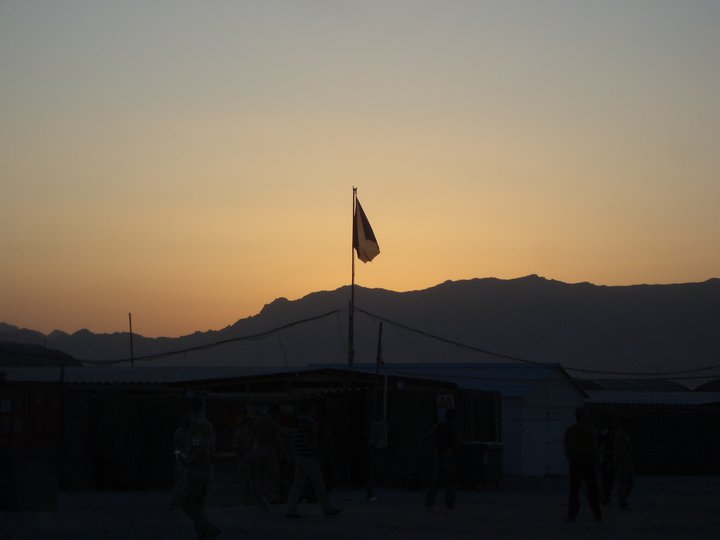
It is usually thoughts of breast cancer prevention and treatment that occupy me most of the time, but for the last week or so I have been distracted by the close of an interesting chapter.   There is every likelihood that this will be the last word on a time which is already fading into memory, and so far is it removed from everyday life that if not properly shared or recorded I might believe had never happened.    Three years ago I went to war in Afghanistan, ran surgery in a combat hospital, survived missile attacks, and came home.

The official reason why we went was drummed into us through numerous media training sessions.  That “Singapore wants to play a responsible role as part of the international community to assist in the reconstruction of Afghanistan.”  On a personal level, the best account I have heard of why we went is by my colleague Mathew Cheng. “I had the skills, and I was willing”.  The need was clearly there, and we went.  On my part there was also a certain amount of professional curiosity.  I had seen and treated urban trauma on an industrial scale after nine months in Johannesburg and I wanted to see how much of that was relevant to the military.  To do that I needed to understand what the military needs are and the best way to do that was to go.    

There was a period of “Force prep” before leaving.  The weapons and personal protection gear had undergone significant changes compared to the time I was in a combat unit. Everything seemed heavier.  Most noticeably the regulars we were with had no problems about motivation.  Neither did the instructors from Guards HQ.  Unlike other training this one had a clear objective in mind, not some nebulous possibility of defending the country for some external threat.  And as a result of that at quiet moments you could see around you the quiet, unexpressed hope that we would be good enough.

The truth is that we were not in constant danger, but danger was a constant sudden possibility.  It came in the random times and places where poorly aimed missiles would land and you took what precautions you could and got on with it.  It did not really give much comfort that these missiles were not aimed at you personally.   Mathew and I were the only non career soldiers in the NATO hospital where we were but we soon developed that common trait of professional soldiers; a kind of quiet detachment and determination to just get on with things. 

We did see first hand the one constant of war:  that young men die, and that doctors cannot save all of them.  there are some distinctions between  young men dying in a war and those on a bike or from a fight in a bar.  Firstly there are a lot less dying in a war than on a bike or in a car.  The action, while occasionally hectic was few and far in between, which is the characteristic of this low intensity deployment.  Even in peaceful sterile Singapore there are a lot more people being injured on the roads and construction sites than in this kind of warzone. Secondly the energy transfers were on a different scale.  Bodies are broken on a bike, they are blown up in a war.  The first major contact was typical:  two casualities from an IED ambush.   The gunshot chest was easily sorted with a chest drain.  His squad mate came in in two different vehicles four hours apart, one as charred bits in a sack.  The first piece they could identify from dental records, the second  from DNA from a lumbar vertebra I helped to pick out.

It is the challenging, potentially unsolvable problems that remain in the memory.  The young girl who had been in the hospital for so long that she could speak Dutch, her fractured pelvis with a temporary fixator that would be permanent unless we could improvise something.  A young boy with a fractured femur that again had a temporary external fixator that we did not have the equipment to sort out.  The sad thing about a combat hospital is that we are kitted out to treat soldiers, the civilian load is just patch up and send up.  But Afghan kids have nowhere else to go.   Matt sorted both out with great ingenuity and skill.  There are a few afghan kids now with titanium implants improvised from used Apache helicopter parts.

For me the nutcracker was this 18 month old boy who looked about the size of the average nine month Singapore baby with a stone in the urethra.  It was firmly stuck obstructing the urine flow and as the dammed up urine got infected he had sepsis and renal failure.  We had a wonderful pediatric trained intensivist in among our dutch colleagues who sorted this out within a week but the stone remained.  I remember the uncle had brought the baby to us after an eight day walk and then had to return to his farm, leaving a 14 year old brother to take care of the child.  I had only seen the operation that was needed more than a decade ago in ideal conditions in NUH.  That time it was performed  by a gifted pediatric surgeon and even he found it hard to avoid injuring vital structures in the penis, which would have led to lifelong obstruction, recurrent infections and eventual kidney failure.  The more I read up the operation, looked at the humungous size of our surgical instruments and most of all the sheer inadequacy of my skills, the more I dreaded doing anything.  Every morning I would go to the ICU and see the baby get better and feel that stone still stuck in the urethra, the urine draining from a catheter through the lower abdomen improvised from a large intravenous line. There is a timing to surgical intervention and as colleagues watch me miss my cue day after day I say a quiet prayer about primum non nocere.  After about 10 days with us the uncle comes and expects to take the child back.    We put the kid under anesthesia and a miracle.  The stone shifts down to the tip of the penis and it’s removed without difficulty.  Delirious with relief it was the time when I wished most of all that there was any kind of alcohol on post.


So last week marked the end of our involvement in Operations Blue Ridge.  Remarkably for an operation involving hundreds of men over seven years, some doing extremely hazardous duties, all SAF personnel returned safely.  Most other countries that have contributed have paid a far higher price for being a responsible part of the international community, both in terms of lives and especially in terms of limbs lost.  At the commemorative ceremony there was a sense of closure.  It is highly unlikely that I ever put on these desert number fours again, or at my age be part of any military op again. It was also good seeing those people we served with for a last time – this time with a noticeable difference from the way we were before we went.  Serving in war always leaves a mark, some more obvious than others.  One thing in common among those who went:  there was no longer that nagging doubt about whether we would be good enough.


Saturday, 18 May 2013

Angelina can come along anytime...


The Long Ride had help from an unexpected quarter this week.  As you may know one of the main goals of our little venture is to raise funds for breast cancer research.  This research looks particularly at risk factors for breast cancer among Asians, especially cancer – predisposing genes, the archetype of which are BRCA mutations. Our group was one of the first to report these mutations in Asians and is in the process of estimating more precisely just what risk these mutations confer to individuals.  This data is crucial in helping patients who undergo genetic testing decide just what they wish to do with this new genetic information.  Such calculation needs large families with many cancers and many individuals, the affected and unaffected, to provide their genetic material. Hence the international nature of our collaborators and the need for substantial funding.

Before this week I knew little about Angelina Jolie outside some of her roles in movies. Not one to follow the private lives of megastars, her account of her bilateral prophylactic mastectomy (a preventive operation that removed most of her breast tissue) led me to look things up. I now see how much this very talented and remarkably attractive woman has done for the most pitiable on this planet.  The understated way in which she shared her condition and how she dealt with it, in the venerable New York Times no less, speaks volumes of how far she has come in living with a proven BRCA1 mutation and taken action to optimize her chances of survival.

If Facebook commentators are any thermostat of public opinion, it would seem that this swings between the extremes  –some say this is overkill and sending a wrong message, others appreciate the courage of her actions and the heroism of making a very private pain an extremely public matter.   There are just two things about the New York Times account that I think are worth highlighting.  Ms Jolie does not have an 80% increased risk of developing breast cancer in her lifetime; she has an over 80% absolute risk of the disease.  Depending on the number of affective relatives and the kind of mutation she has in the gene, that is what she lives with – a breast cancer risk of 8/10, and not the 1/16 that faces the Singapore woman in general. That might make her decision easier to understand, although no easier to make. The second issue I find even more extraordinary:  following the timeline of her preparation for surgery, a period most of our patients find impossibly difficult, a remarkable public appearance was made on the second week of April.  Ms Jolie addresses the G8 submit in London as the UN’s Special Envoy for Refugees, applauding the decision of the G8 to have war rape classified as a war crime.  At what must have been a very trying time for her and her family this lady spoke with impeccable grace and moving eloquence on behalf of thousands that have no voice. http://www.youtube.com/watch?v=TZFfI-n-WpA


This time however Ms Jolie has spoken for another group of women who are silent sufferers.  The women who come from families with a cancer history that suggests the presence of an inherited genetic risk.  It should be pointed out that these families are rare; mutations at the BRCA1 and BRCA2 genes account for less than 7% if all breast cancers.  There are nevertheless established indicators of which breast cancer patients should be tested for mutations.  Simply put, these include those with breast cancer diagnosed under the age of 35 years, two family members with breast cancer under 40 years or three family members of any age from the same side of the family (maternal or paternal). (Dr Teo Soo Hwang from Malaysia is credited with simple 3-2-1 aide memoir) Women with breast and ovarian cancer in the same patient and men with breast cancer should also be offered testing.   At the National University Hospital we see between five to ten of these women and men every year and genetic testing is offered.

What might be surprising to some is that less than one in five of those who qualify choose to undergo gene testing.  There are several reasons for this.  The nature of genetic testing is that we treat not only individuals but families.  This seems to meet with much more difficulty in Singapore than it did in the UK. Each individual who participates in genetic testing must think through the consequences of the results.   A sister or brother of a patient with cancer and who is unaffected may discover through genetic testing that her chance of breast cancer is now 50 – 99% , or worse he might discover the possibility that the risk may have been transmitted to his children.  Without the genetic knowledge they would have gone on blissfully unaware.  Now they face a difficult decision of preventive surgery or closer surveillance, but most of all the cancer anxiety that comes with knowing they have a much higher chance of cancer than practically everyone they meet.   Inflict this on someone who has almost always seen the loss of a loved one through cancer, very likely at an impressionable age, and it becomes clearer just what Ms Jolie has gone through. Some members of our families have regretted this knowledge.  The benefit of course is that a woman from a family with a proven BRCA mutation may have found that she did not inherit the gene and consequently cannot pass it to her children.  To many women in these families with multiple cancers their own cancer has often been a matter of when and not if.  Their relief is one of the wonders of genetic identifiers of risk. Without this genetic marker two sisters would have shared the same family history and therefore the same calculated risk. The genetic mutation is an individual marker of risk and not inheriting that marker is freedom from that risk.  

In Singapore we are lagging in making this information available to the women who want it.  Despite the soul searching and familial difficulties that must be faced the most common obstacle to gene testing in Singapore is the cost. The genetic test still costs about 2000 USD and is not subsidized or payable by  Medisave although I understand steps are being taken to change this.  An obstacle which is harder to ovcercome is the insurance discrimination that follows those that undergo genetic testing.  Most insurance agencies will refuse to cover anyone with a genetic disease in the family and so this discrimination will follow not only patients and their relatives but possibly their children as well. Hopefully this too will change.   In the Netherlands genetic testing is free and discrimination is banned.  South Korea has much the same arrangement.  We need to get on.


Sunday, 28 April 2013

Riding in Thailand


There are all sorts of reasons to ride to Thailand.  The excellent north south highway makes traversing the Malay Peninsula a matter of a day’s ride.  Hardcore hard arsed riders have made it a point of getting to Hat yai in a day, although personally I have always found riding past Penang or Ipoh around the time of a late lunch very difficult to do without stopping for a little something. I know you could easily do the eating rounds on the way back from Thailand, but somehow its not quite a holiday until the penang kuay teow from Red Garden, the Mee Goreng from Brooke Street or the ipoh guo teow from tianzhen coffee shop is set before me.  So this time finds me spending a night in Georgetown before heading out across into Thailand at the Weng Kerlian crossing. 

For the biker this is hallowed ground; many feel you’re not really an overland traveler that justifies all that wonderful kit on the bike until you crossover from Malaysia.  Then there is the change in riding conditions. The north - south highway is a smooth as silk ribbon of perfect engineering that goes on for miles and miles. The main danger isn’t the road conditions, it’s trying to stay engaged.  Look carefully that the crashes that one invariably sees on this highway – especially those in the hours of darkness -  and what you notice is the absence of tyre marks before the wreck at the side of the road – a sure sign that someone’s fallen asleep.

Once in Thailand all that changes.  There is a highway system that allows an easy 400 km a day but its nothing like what you leave in Malaysia.   For the biker I suppose what sums up the situation more clearly than any other is this road sign:


You see in Thailand bikes are meant to be limited with bicycles on the road shoulder, not mixing it up with the rest of the traffic,and certainly not overtaking anybody.  In many ways this is consistent with the local situation.  There are hardly any local bikes larger than 100ccs on these rural roads.  Most hardly travel above bicycle speeds.  Making allowances for a five hundred pound one liter bike is unthinkable.

What this means is that the spider-sense needs to be modified.  Under usual riding conditions outside Thailand the most dangerous time on a trunk road is when overtaking against oncoming traffic.  In Thailand it’s when you have this nice straight piece of road all to yourself in your direction and some traffic coming the opposite way is stuck behind a slower vehicle.  What has happened on numerous occasions is that they all start overtaking and seem to disregard your right of way.  What has been explained to me is that they know you’re a bike and you should be on the shoulder.  Similar situation when you have a faster moving vehicle coming up behind you: they will go through you rather than overtake because you’re supposed to be on the shoulder. 

There seems to be some solutions to this. One is to make your bike obviously not the kapcai they think you are.  A friend of mine on a gorgeous Kawasaki voyager has no such problems because he actually has three lights forward headlights.  Some others have added on interesting bits of lighting although it should be said that some kapcais have this as well. The other solution is to obey the law and actually stick to that shoulder. This will be a bit of a trick, because what can be found on that shoulder includes livestock, monks, bikes heading the other way.


The third alternative I think is the most sensible.  Slow down, forget you have horsepower far in excess of requirements, behave as though you are a local kapcai and take in the scenery.  It’s  not so much an issue of making the required miles as seeing as much of the place as you can. And a lot of the scenery is simply fabulous and more than makes up for the change in riding habits.  Riding outside of Trang the limestone formations come right up to the edge of the road.


On a whim I actually followed one of the road signs that suggested an off road turn would lead to a nice waterfall.  Completely off the planned route and not indicated on the GPS or the Michelin maps. Pretty soon I’m enjoying a genuine blast of some gravel trails and catchup with some locals and their off road vehicles.  At the back of my mind was the Schedule.  There were miles to make and only so much daytime left, but I figured this was a wandering trip and I might never pass this way again.  I’m really glad I did. In the middle of nowhere was proof that if you behave like a local you might just see what the locals keep to themselves.


Thursday, 11 April 2013

Dare Greatly


“It is not the critic who counts; not the man who points out how the strong man stumbles, or where the doer of deeds could have done them better. The credit belongs to the man who is actually in the arena, whose face is marred by dust and sweat and blood; who strives valiantly; who errs, who comes short again and again, because there is no effort without error and shortcoming; but who does actually strive to do the deeds; who knows great enthusiasms, the great devotions; who spends himself in a worthy cause; who at the best knows in the end the triumph of high achievement, and who at the worst, if he fails, at least fails while daring greatly, so that his place shall never be with those cold and timid souls who neither know victory nor defeat”


Theodore Roosevelt April 1910


Thought to give a glimpse of what has gone into putting this trip together. One reason is to acknowledge the tremendous amount of support so many people have given us; another to give prospective overland travellers an inkling of just what is required.  Ever since this project has got the green light it has been a whirlwind of activity and it is impossible to overstate just how much it has taken over our lives.  Based on previous travellers it has about a one in three chance of success and although we try to make plans as detailed as possible, we know it’ll all go to pot as soon as we cross the causeway.  It would not be an adventure if it didn’t. There is a sensation that we have already made so much progress when in reality we haven’t even set off yet! 

It might sound a little odd but the first hurdle to cross when this idea was mooted was the need to be persuaded to actually go.   This trip is a big hit on time, finances and just calling in favors and as we put things together at the initial phases there was almost this hope that someone would pull the plug as early on so that we wouldn’t get our hopes raised only to have them dashed.  There were many potential dealbreakers.  The bosses could say this was barmy and get back to work.  The wives could say, well pretty much the same thing.  Experienced travellers could try to talk us out of it, or that with the time constraints it would be an impossibility. Colleagues could say they would not do without our services for four months. 

As it transpired there was none of the above.  The bosses not only thought it would be a good idea, they wanted to come along for parts of the journey.  In this regard Prof CN Lee, our immediate boss has been a real stalwart for the cause, putting us in touch with his wealth of contacts from Russia, Kazakhstan, India, China, Myanmar.  We have met a host of very accomplished people who share the common traits of wanting to travel more, see more, learn more. Of these the most intriguing has been the indefatigable Mr Jim Rogers who has been around the world not once but twice! (see “the Investment Biker” for a perfect combination of adventure travelog and financial risk prediction – a gem of a book I think only he could write)


Support has come from patients and their relatives, students, cabinet ministers, hotel owners, bike shop operators, colleagues from across the continent.  it's like a cocker spaniel you cannot help but pat: There seems to be something about this trip that captures the imagination in a way that makes no difficulty insurmountable and everyone wants to plug in in whatever way possible. 

A special word should be said about Goh Mia Chun and his lovely wife Samantha. This affable and generous couple were the first Singaporeans to circumnavigate the world on their Honda African Twin some three years ago with far less resources than we have to call upon. Their wonderful blog can be found at singaporedream-rtw If anyone needs inspiration to get on their bike and get going.  Goh has been invaluable and unstinting in the practical details that worry the uninitiated – border crossings, lodgings, tyre changes, bike modification, route planning. Most importantly just being in his company makes us realize that this journey will be a mental voyage as much as a physical one, and that the most important equipment is a mind that will adapt, stay focused and not fussed, and quietly get the challenges sorted.


The first challenge was the bikes. Mike has a BMW GSA – a beast of a bike tailor made for this kind of go – anywhere do – anything trip.  Look at Ewan and Charlie’s TV programmes and  they considered no other bike suitable for the task.  I’ve taken a different approach.  A Suzuki Vstrom 1000 eats roads and hills but needs a lot of modifications to make the grade – a chance for tailoring the bike to me and knowing what its limitations are.   Its now got steel hoses for the hydraulics, Hepco and Becker panniers and crash bars, HH brake setup, 4mm custom made bashplate, higher windscreen. As the date approaches it will be cranked up suspension, new chain and sprockets, all cables and fluids changed.  The bikes will be asked to make a 30 000km journey in the space of just over three months.  Essentially asking it to do three years wear and tear in three months –so everything that can be anticipated to need changing will be sorted before we leave.   Unfortunately my proposed custom paint job did not go down too well.  Some feel it goes against the common sense approach to not stand out.  You decide.


The second most important consideration is the route.   This has taken a Kindle with all the Lonely Planets for all the countries in Europe and asia, and 24 road maps which now adorn the office walls.  Invaluable to planning has been two websites www.advrider.com and www.horizonsunlimited.com.  These not only provide more information that you will ever need about travelling from where you are to anywhere you want on a bike, but also detailed accounts of over 150 intercontinental bike rides.  Some have been going for over four years, and if anything provide reassurance that if you think you’ve got a bad case of wanderlust, they have got it a lot worse than you have.

 Most trips like this have taken at least half a year, so with only four months we have to choose the fastest safest route.   This has been hard.  I think we are down to plan E now.  The world is a wonderful place and there is so much of it we are going to pass by without any chance of stopping.  I wanted to dip by the ghats in Varanasi, walk the corridors of a palace in Jaipur, pay my respects at two tennis courts in Kohima..  It has been frustrating sometimes to find one detailed plan has to be hashed because of some development or other.  I was really keen to ride through Myanmar and in the last three months two groups of bikers have been the first to bring their own bikes to this newly opened border. Unfortunately recent ethnic riots and killing have put paid to this.  Cannot really plan a route through that and tell friends and family I have planned responsibly.  No Myanmar unfortunately means also no India, Nepal and Pakistan.  No karakoram highway.  This means not visiting some cancer collaborators and cancer hospitals where we feel their cancer experience really needs to be told. Ah well, another trip then, when things have settled a bit.  As things are now we will be riding Shangri La, from Laos to Yunnan and then through Tibet into Xinjiang and then on the Almaty and the ‘Stans before Iran and Turkey.  Stunning scenery and truly desolate roads await us, but it will take some time before I completely get over the disappointment of not riding into Darjeeling,  Kathmandu and Lucknow…